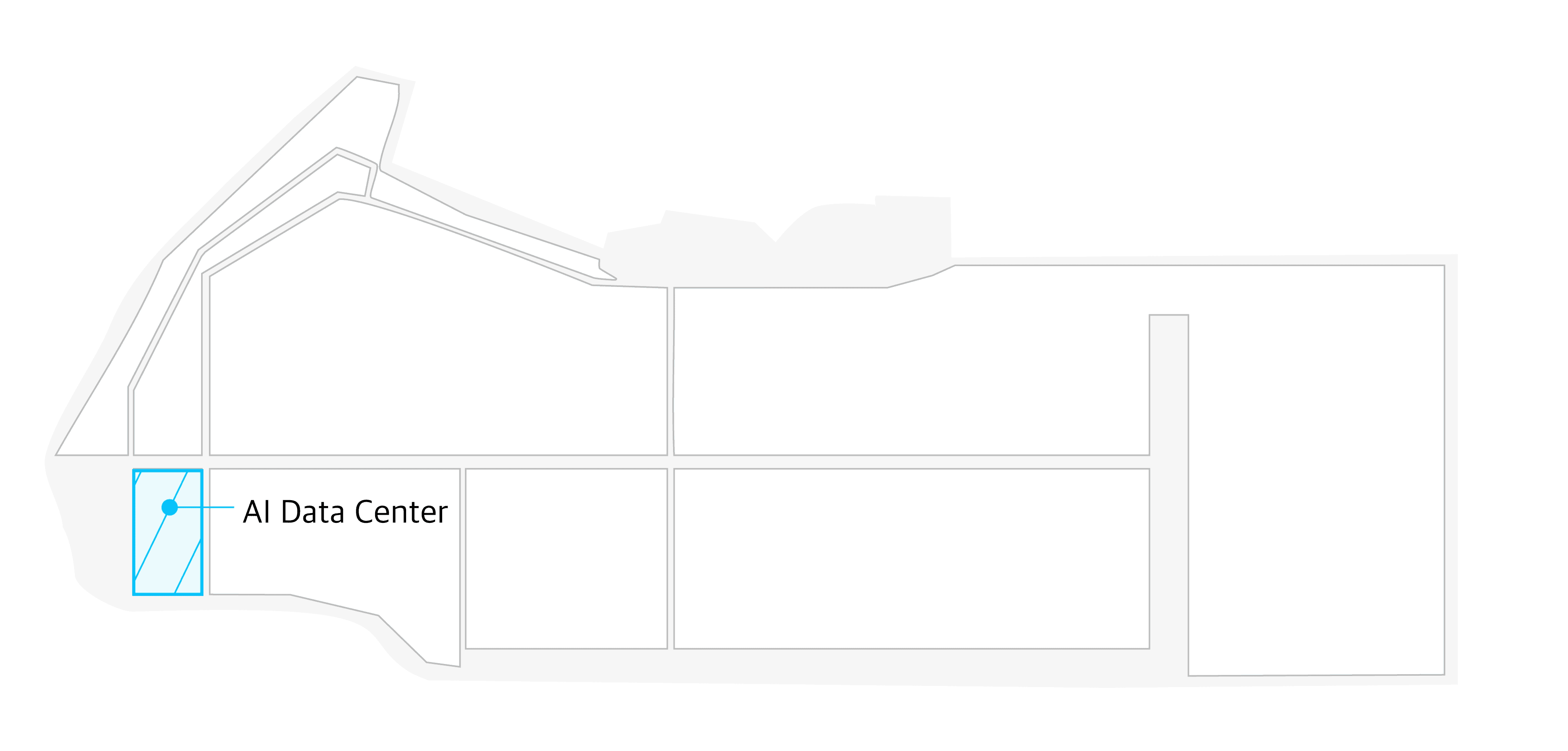
AI Data Center

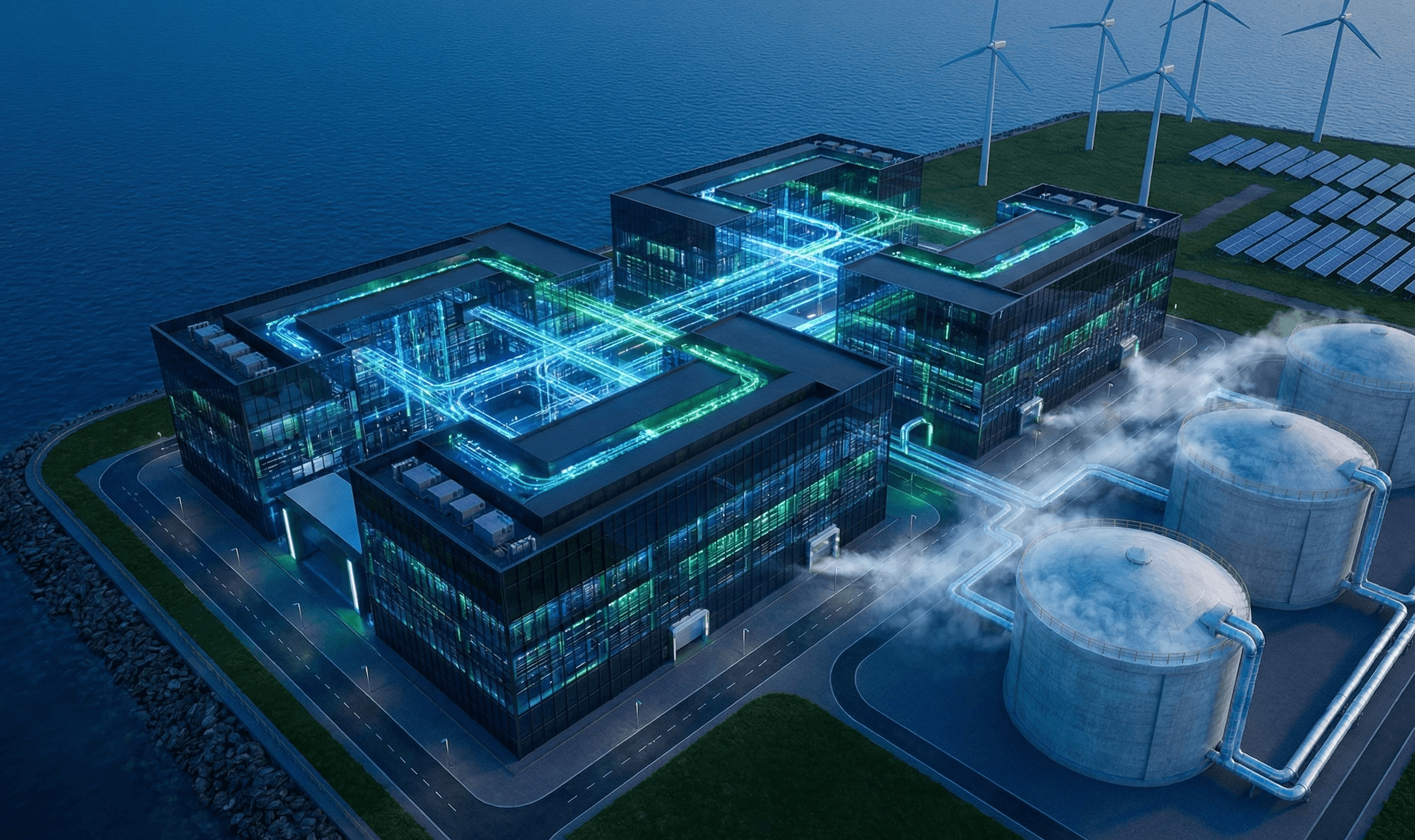
Next-generation eco-friendly data hub reducing operational costs by over 40% through LNG cold energy cooling and direct supply of renewable energy

Smart-Green-Energy-

AI Data Center

Next-generation eco-friendly data hub reducing operational costs by over 40% through LNG cold energy cooling and direct supply of renewable energy

Service overview

Service overview

Cutting Costs and Carbon Emissions

The Galsaman Data Center receives electricity directly from its on-site solar, wind, and hydrogen fuel cell plants via Direct PPA without going through KEPCO's transmission and distribution network. This eliminates transmission losses and dramatically reduces electricity costs, creating an environment optimized for power-intensive generative AI server operations.

Cooling costs, which account for 40% of data center operating expenses, have been significantly reduced using 'LNG cold energy (-162℃).' By recapturing the cold energy wasted during vaporization at a nearby LNG terminal for server cooling, the center implements a power-free eco-friendly cooling system, achieving world-class efficiency with a PUE (Power Usage Effectiveness) of less than 1.1.

Additionally, by directly using 300MW of self-generated renewable energy, it reduces electricity costs by 30% and automatically meets RE100, a critical requirement for participating in the global supply chain.

With infrastructure optimized for generative AI and big data processing, we aim to be a reliable partner for companies leading future technologies.

Feature Icon

Direct power supply

Directly supply electricity produced from a 300MW renewable energy complex to achieve both 'Zero' carbon emissions and the lowest electricity costs.

Feature Icon

Direct power supply

Directly supply electricity produced from a 300MW renewable energy complex to achieve both 'Zero' carbon emissions and the lowest electricity costs.

Feature Icon

Direct power supply

Directly supply electricity produced from a 300MW renewable energy complex to achieve both 'Zero' carbon emissions and the lowest electricity costs.

Prominent Feature

LNG Cold Energy Cooling

Utilize the -162℃ LNG cold energy in the heat exchanger to reduce cooling energy by over 70% compared to conventional electric cooling.

Prominent Feature

LNG Cold Energy Cooling

Utilize the -162℃ LNG cold energy in the heat exchanger to reduce cooling energy by over 70% compared to conventional electric cooling.

Prominent Feature

LNG Cold Energy Cooling

Utilize the -162℃ LNG cold energy in the heat exchanger to reduce cooling energy by over 70% compared to conventional electric cooling.

Feature Icon

Achieve RE100

Meet RE100 with own renewable energy

Feature Icon

Achieve RE100

Meet RE100 with own renewable energy

Feature Icon

Achieve RE100

Meet RE100 with own renewable energy

Prominent Feature

Uninterruptible Power

24/7 UPS-grade reliable power supply through energy independence

Prominent Feature

Uninterruptible Power

24/7 UPS-grade reliable power supply through energy independence

Prominent Feature

Uninterruptible Power

24/7 UPS-grade reliable power supply through energy independence

Key Capabilities & Features

Key Capabilities & Features

Key Capabilities & Features

LNG Cold Energy Cooling

LNG Cold Energy Cooling

  • -162℃ Ultra-low Temperature LNG Cold Energy Utilization

  • Zero Carbon Emissions with Eco-friendly Cooling

  • 60% Reduction in Cooling Costs

Independent Power Supply System

Independent Power Supply System

  • 300MW Direct Supply of Renewable Energy

  • Independent Microgrid Operation

  • 24/7 Uninterruptible Power Supply (UPS) Grade Power

Network Infrastructure

Network Infrastructure

  • Deployment of High-Speed Optical Network

  • Optimization for AI/Big Data Processing

  • Support for Real-Time Data Transmission

INTEGRATED SYSTEMS

INTEGRATED SYSTEMS

Fuel - Resources - Carbon

Complete ecosystem

FUEL FLOW
Resource
Flow
Carbon Flow

Energy Independence

300MW self-generation and independent microgrid operation for 24-hour continuous power supply

uninterrupted power supply

LNG Cold Energy

Reduce data center cooling costs by up to 60% with LNG cold energy (-162℃) utilization

RE100 Compliance

Immediate 100% renewable energy usage available upon move-in, with automatic REC certificate issuance

System

Circular Economy

Convert waste to SRF and utilize in combined heat and power for a complete circular system

.

Multimodal Logistics

Direct connection to Gwangyang Port, reduction in logistics costs through integrated land-sea-air system with railway network and undersea tunnel

Digital Tracking

Carbon Emissions Lifecycle Real-time Monitoring and ESG Reporting Automation

INTEGRATED SYSTEMS

Fuel - Resources - Carbon

Complete ecosystem

FUEL FLOW
Resource Flow
Carbon Flow

Energy Independence

300MW self-generation and independent microgrid operation

24/7 uninterrupted power supply

LNG Cold Energy

Data center cooling costs reduced using LNG cold energy (-162℃)

Up to 60% saving

Multimodal Logistics

Integrated logistics via rail network, submarine tunnel, directly connected to Gwangyang Port

Reduced transportation costs

RE100 Compliance

100% Renewable Energy Available Upon Move-in, REC Certification

Automated Issuance System

Circular Economy

Converting waste to SRF for use in cogeneration

Complete circular system

Digital Tracking

Real-time Lifecycle Carbon Emissions Monitoring and ESG Reporting

Automation

Common questions

Common questions

Common questions

How does the LNG cold energy cooling system work?

The Galsa Bay AI Data Center utilizes the -162℃ cryogenic energy generated during the vaporization of LNG (Liquefied Natural Gas) to cool its servers. This method reduces cooling costs by over 60% compared to traditional air cooling, maintains a stable temperature 24/7, and manages heat in an eco-friendly manner to minimize carbon emissions.

Is the power supply stable?
Can RE100 certification be obtained automatically?
How much are electricity savings?
Suitable for AI computations and high-performance computing?
How does the LNG cold energy cooling system work?

The Galsa Bay AI Data Center utilizes the -162℃ cryogenic energy generated during the vaporization of LNG (Liquefied Natural Gas) to cool its servers. This method reduces cooling costs by over 60% compared to traditional air cooling, maintains a stable temperature 24/7, and manages heat in an eco-friendly manner to minimize carbon emissions.

Is the power supply stable?
Can RE100 certification be obtained automatically?
How much are electricity savings?
Suitable for AI computations and high-performance computing?

Contact Us

Contact Us

Leave your inquiries and we'll respond within business hours.

BG Image
BG Image

Korean

En

Korean

En